
Demoralising the private companies and disregarding their contribution won't do any good to the country or its youth as our experience has shown that private enterprises in mobile manufacturing has lead to every poor family owning a mobile phone now, while the country's private sector in the pharmaceutical space has been serving humanity through vaccines and medicines during Covid times, Modi said.

Epidemiologists point out that if there is no second wave, it means that the number of infected has surpassed the uninfected, reports Ruchika Chitravanshi.

The survey showed that women workers fared worse than men when it came to employment recovery (53 per cent versus 57 per cent) and urban areas have been much worse hit despite a quicker bounce back.
Moreover, 5,611 companies struck off earlier by the ministry of corporate affairs because of compliance-related lacunae, were registered again.
Corporate social responsibility rules that kicked in on Friday also set a three year time-limit for any CSR project, among a series of other amendments introduced by the government.

The vaccine was well tolerated in all dose groups with no vaccine-related adverse events.

CII has also called for tax incentives for new health care projects and import duty relief for lifesaving equipment.

A draft proposal by the sub-committee of the insolvency law committee has recommended that the corporate debtor (CD) may initiate the prepack since it may prove difficult to implement if creditors are allowed to do so without the willingness of the promoter.
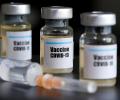
'I would go for Bharat Biotech's Covaxin and not Covishield, and that is my personal judgment since at least 11,500 have got at least one dose by now and it has proven to be safe.'
'The government should put the whole road map together for the vaccine and decide how industry can support...' 'They should allow the private sector to vaccinate.'

The expert committee sought more information from Serum Institute regarding the Oxford-AstraZeneca vaccine.

The Serum Institute of India has stockpiled 40 mn-50 mn doses and is adding more every week. Most of these will come to India.

Bharat Biotech recruited 13,000 participants for the Phase-3 clinical trial of Covaxin. This is one of the largest efficacy trials held in the country.

For vaccination, online registration is mandatory. Thereafter, eligible beneficiaries will be informed on their registered mobile number about the nearest vaccination facility, and the date and time of vaccination.

Experts say this further underlines the lack of investor interest in stressed assets at present.

The company has developed detailed logistical plans and tools to support effective vaccine transport, storage, and temperature monitoring. Sohini Das and Ruchika Chitravanshi report.

'We were among the first organisations to voice our opposition to the three Acts long before anyone else and had sent memorandums collected from 3,000 tehsils across the country to the agriculture ministry to amend the Bills, but nothing was accepted,' says BKS general secretary Badri Narayan Chaudhary.

During this time of the year, potatoes and vegetables come from Punjab and Haryana.

One of the changes being proposed is allowing LLPs to issue non-convertible debentures.
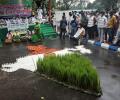
Though the Bills of Punjab and Rajasthan have a lot of similarities, the one approved by the Chhattisgarh Assembly is structurally different. None of the three has tried to address a key demand of the agitating farmers in full, which is to make all payments below the MSP, within and outside mandis, illegal.
 © 2026 Rediff.com - Advertise with us - Disclaimer - Privacy Policy - Sitemap - Feedback - About us - Terms of use - Grievances